View Shopping Bag Clearance Rack Plus Size Chart

Please visit plushcatstyle.com for Big On Batik styles
or email for orders.

plus size clothing by category
 
specialty plus size clothing sizes
 
plus size clearance items
 
one-only clearance items
Now a featured seller
Now a featured plus size clothing, plus size apparel and plus size accessories seller on Amazon.com!  Click here to shop now!
About The Fabrics:
Lee, our designer in Bali, Indonesia

The roots of batik are ancient and spread throughout the world. No one knows exactly when people first started applying wax, rice paste or even mud to cloth to resist dye. But what we know today as the process of batik brings centuries of cultural influences and untold assortment of recipes, stories, patterns, processes, histories, hopes, beliefs and dreams.

Batik is known to have existed in China, Japan, India, Indonesia, East Turkestan,Thailand,Europe and Africa. But it was on the island of Java in the Indonesian archipelago where batik emerged as one of the great art forms of Asia. Initially, it was the pastime of privileged women but gradually batiked cloth became synonymous with aristocracy. As its popularity increased,more and more people became involved in batik production. Eventually, it became the national costume worn all over the islands. When the Dutch colonized Java in the seventh century, batik was introduced into Europe.

In Africa, traditions of resist dyeing are woven into the histories of many tribes. The Yorubas of Southern Nigeria use cassava paste, while the Soninkeand Wolof tribes of Senegal use rice paste. Then there is the very famous mud cloths of the Bambara people of Mali produced by applying mud, from local ferrous ponds, and coloring the cloth with a dye from tree bark.

China has a long history of batik, but today the technique is most practiced by nomadic tribes who live on either side of the South China border. Foremost among these tribes are the Miao who make exquisite batik cloth in combination with embroidery and applique. And in India batik changed again -- wax drawing was combined with hand painting. It belonged to the caste of indigo dyers and the cloth told intricate stories of religious legends. Even today, bards recite verses depicting the episodes illustrated in these batiked cloths.

Like many methods of hand-produced cloth, batik processes are disappearing as they are replaced by more factory production methods such as silkscreening.But batik is a very needed cottage industry in many areas of the world as it is labour intensive, cooperative and requires minimal capital.

The Batik Process

The word "batik" is the name for a process of resist dyeing and, by extension, for the type of bold exotic patterns used on fabrics dyed by this process. The process involves covering the areas of cloth which are not to be dyed with melted wax; the wax is later removed by immersion in boiling water. Using this slow and intricate process, executed by crafts people in small workshops, a single piece of batik may take more than a year to complete. Silk, rayon and cotton are used for batik. Unlike cotton, silk and rayon require little preparation; their fibers are quite receptive to wax and dye without the elaborate series of treatments required by cotton. However, among Javanese batik makers the preference is cotton, with its lower cost and greater availability.

Functions of Batik

The textiles in Southeast Asia have served many functions, from ritual gifts to currency, but their primary use has been as clothing. The wearing of batik on Java is a prime example of clothing as a mode of communication--a silent communication conveying messages about gender, age, class,religion,and regional and ethnic identity. There is a direct relationship between the makers and wearers of north coast batik,which centers on an acute awareness of the symbolic content of its many designs and colors.

Fabric Care

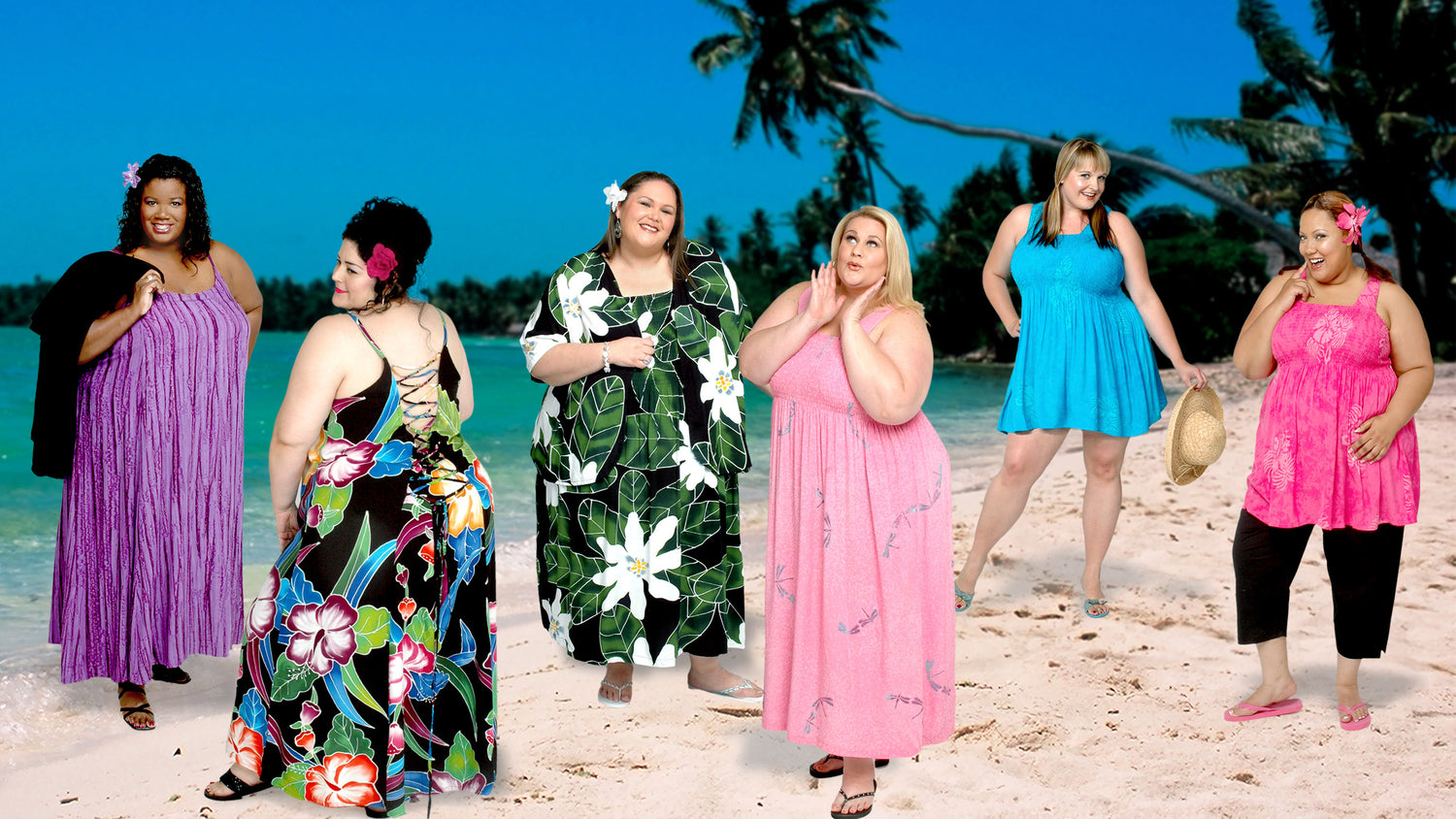
Our garments are made from natural fibers. Most garments in our catalog and website are made from 100% first quality rayon. Our bathing suits are 85% rayon, 15% Lycra. Our Art Coats are made from silk, linen, brocade, and other luxury fabrics.

Except where noted, all Sarongwear is machine wash cold, delicate cycle, hang to dry. Dry cleaning is also an option, and will keep the colors bright and vivid indefinitely.

About Big On Batik
Shopping Tools
Customer Service
Plus Size Links & Partners
Customer Service & Mail-Order Phone Toll-Free 1-888-411-9790, Monday - Friday, 9AM to 6PM Pacific. Plus size clothing & apparel. International orders welcome! Visa, MasterCard and American Express accepted here.
~ Plus Size Clothing, Women's Plus Size Dresses, Tops, Pants, Swimwear, Sleepwear, Formalwear & Plus Size Jewelry ~
Copyright © 2004 Big On Batik Plus Size Clothing. All rights reserved. Hosted by beHosting. International orders welcome.